
Add description, images, menus and links to your mega menu
A column with no settings can be used as a spacer
Link to your collections, sales and even external links
Add up to five columns
Add description, images, menus and links to your mega menu
A column with no settings can be used as a spacer
Link to your collections, sales and even external links
Add up to five columns
SUBSCRIBE AND SAVE UP TO 15% EVERY ORDER + FREE SHIPPING! (🇺🇸 ONLY)

How to Quit Dipping: A Doctor's Step-by-Step Guide
July 23, 2019 5 min read
By Dr. Brent Agin, MD, founder and creator of TeaZa® · Updated October 2026
If you're ready to quit dipping, you already know it won't be easy. Dip and chew deliver nicotine, and they're also one of the most physical habits there is: the can in your pocket, the pinch, the feeling of it in your lip for hours. To quit for good, you need a plan for both. This guide walks you through it step by step — including whether to go cold turkey, what withdrawal feels like, and how to handle the part most people underestimate: missing the dip itself.
Why quitting dip is so hard
When you quit smokeless tobacco, you're breaking two things at once:
- Nicotine dependence. Dip and chew contain nicotine, which is highly addictive. When you stop, your body goes through withdrawal.
- The oral habit. Years of having something in your lip — while driving, working, fishing, watching the game — become automatic. That's oral fixation, and it can trigger cravings long after the nicotine is gone.
Most quit plans focus only on the nicotine. For dippers, the habit is often what sends them back. A good plan handles both.
What to expect: dip withdrawal timeline
Everyone is different, and it depends on how much and how long you've dipped. According to the Cleveland Clinic, nicotine withdrawal typically follows this pattern:
- 4–24 hours: Symptoms begin — usually cravings and irritability.
- Days 2–3: Symptoms are usually at their strongest. This is the hardest stretch, and it's short.
- After day 3: Things get a little better each day.
- Weeks 3–4: For most people, withdrawal symptoms have faded.
Common symptoms include cravings, irritability, anxiety, trouble concentrating, trouble sleeping and increased appetite. They're uncomfortable, but they're temporary. For a closer look at the weeks and months after you quit, read what happens when you quit dipping.
Cold turkey or cutting back?
- Cold turkey: Stop completely on your quit date. Withdrawal is more intense at first, but it's over sooner, and you never have a can around "just in case."
- Cutting back: Over one to two weeks, use fewer dips per day or space them further apart, then stop on your quit date. This can take the edge off withdrawal and helps you spot your triggers before quit day.
Both can work. What matters most is having a plan for your triggers and something ready to replace the habit. If you dip heavily or have health conditions, talk to your doctor — nicotine replacement or prescription medication may be right for you.
How to quit dipping: 10 steps
Step 1: Set a quit date
Pick a day within the next two weeks so you have time to prepare. Put it on your calendar. Many people like a Monday or the start of a new routine.
Step 2: Write down your reasons
Your health, your teeth and gums, your family, your money, or simply not wanting a can to run your day. Keep the list in your wallet or phone for day 2 and day 3.
Step 3: Map your triggers
For a few days before your quit date, notice every time you reach for a dip. Common triggers:
- Driving or commuting
- After meals
- Work breaks or long work sessions
- Hunting, fishing, golf or watching sports
- Drinking or being around other dippers
- Stress or boredom
For each one, decide in advance what you'll do instead.
Step 4: Tell people
Let family, friends and coworkers know your quit date. Ask friends who dip not to offer you one or leave a can out around you.
Step 5: Replace the dip, not just the nicotine
This is the step most people skip. When you take away the dip, you leave an empty space right where the habit used to be. Fill it on purpose.
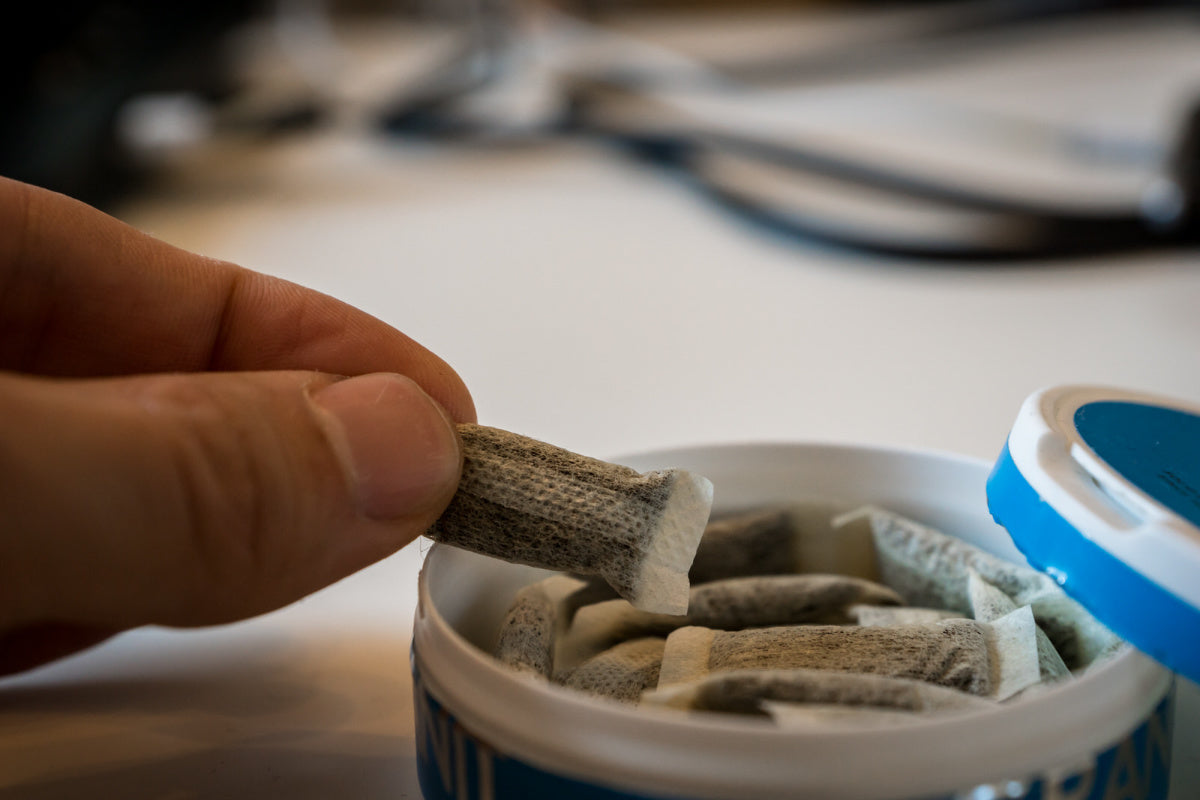
That's exactly why I created TeaZa®. TeaZa is a nicotine-free, tobacco-free herbal pouch that goes in your lip just like dip. It's about 0.7 grams — roughly 2 to 4 times the size of a typical nicotine pouch — so it feels fuller, closer to a real dip, and it's built to last about 1–3 hours.
- TeaZa Energy — about 50mg of natural caffeine per pouch from green tea and yerba mate. Wintergreen and Power Mint give you the familiar minty taste of dip.
- TeaZa Chill — caffeine-free, made with chamomile, passion flower and magnolia bark, for evenings or whenever you want to wind down.
Compare your options in our guide to chewing tobacco alternatives.
Step 6: Stock up on backups
Keep other options within reach for when a craving hits. The American Cancer Society suggests things like sugar-free gum or hard candy, toothpicks, cinnamon sticks, carrots, celery or pickles. Sunflower seeds and beef jerky are popular with former dippers too.
Step 7: Ditch every can
The night before your quit date, get rid of all your dip — home, truck, desk, tackle box, gym bag. Put a can of TeaZa in each of those spots instead.
Step 8: Get through the first week
- Stay busy and change up your routine where you can.
- Exercise — even a walk — helps with stress and restlessness.
- Drink plenty of water and keep regular meals. Your appetite may go up, so keep healthy snacks around.
- Remember a craving usually passes within a few minutes if you ride it out.
Step 9: Get support
You don't have to do this alone. Free help is available:
- 1-800-QUIT-NOW connects you to your state's free quitline.
- Veterans: call 1-855-QUIT-VET or visit Smokefree Veterans.
- EX Program from Truth Initiative offers free quit support.
- Smokefree.gov has free tools and quit plans.
If you want a set daily routine, our 14-day Switch Kit gives you a simple plan to follow.
Step 10: If you slip, start again
One dip doesn't erase your progress. Most people take more than one try to quit for good. Figure out what triggered it, adjust your plan for that moment, and start again the same day.
Keep an eye on your mouth
Smokeless tobacco is linked to gum disease and oral cancer. After you quit, keep up with dental visits, and see your dentist or doctor about any sore, white or red patch, or lump in your mouth that doesn't heal within two to three weeks.
Real stories from former dippers
Read how Ross, Matthew and Daniel replaced their dip habit with TeaZa.
Frequently asked questions
How long does dip withdrawal last?
Nicotine withdrawal usually starts within 4–24 hours, peaks around days 2–3, and fades over about three to four weeks, according to the Cleveland Clinic. Habit cravings can pop up longer, but they get weaker each time you get through one.
Is it better to quit dipping cold turkey?
Cold turkey gets you through withdrawal fastest but is more intense at first. Cutting back over a week or two can make it easier. Either works best with a quit date, a plan for your triggers and something to replace the habit.
What can I put in my lip instead of dip?
Many former dippers use a nicotine-free, tobacco-free pouch. TeaZa is designed to feel closer to dip, with a fuller pouch that lasts about 1–3 hours.
How do I stop craving dip after meals or while driving?
Plan a replacement for those exact moments — keep a can of TeaZa or sugar-free gum in your truck and at the table — and change up the routine, like taking a short walk after eating.
Can TeaZa help me quit dipping?
Many people find that replacing the habit makes it easier to stop using dip. TeaZa is not a medication or an FDA-approved smoking-cessation product; if you need help with nicotine withdrawal, talk to your healthcare provider.
About the author: Dr. Brent Agin, MD, is the founder and creator of TeaZa®. He developed TeaZa's nicotine-free, tobacco-free pouches to give people a healthier way to replace the pouch, dip and vaping habit.
Leave a comment
Comments will be approved before showing up.
Subscribe
Sign up to get the latest on sales, new releases and more …